A look at the wide range of problems which can be fixed, and the 3 which can't...
A lot of people start their book repair journey with my by asking, “Can my book be repaired?”. Perhaps your beloved book has been in pieces for years, and you can hardly remember it in a decent condition. You’ve done the right thing by keeping it together in a shoebox or something, but surely it’s beyond saving?
I’m here to reassure you that a book can be in several pieces and still be brought back to life. In all my years of carrying out book repairs, I’ve only come across a handful of book damage conditions which can’t be truly rectified, but even then I can prevent further deterioration from happening.
Let’s take a look through the wide variety of issues I deal with to fix a damaged book, and you can make a note of which ones apply to your book for when you’d like me to take a look at yours.
Surely damage can’t get more irreparable than the book being split in half, or worse, into separate pieces? Well, don’t be so sure! This happens because the sewing thread eventually wears out with the book being opened and closed; it’s typically well-used, well-loved books which suffer this fate, so don’t be too upset this has occurred – it’s only because you enjoyed the book so much!
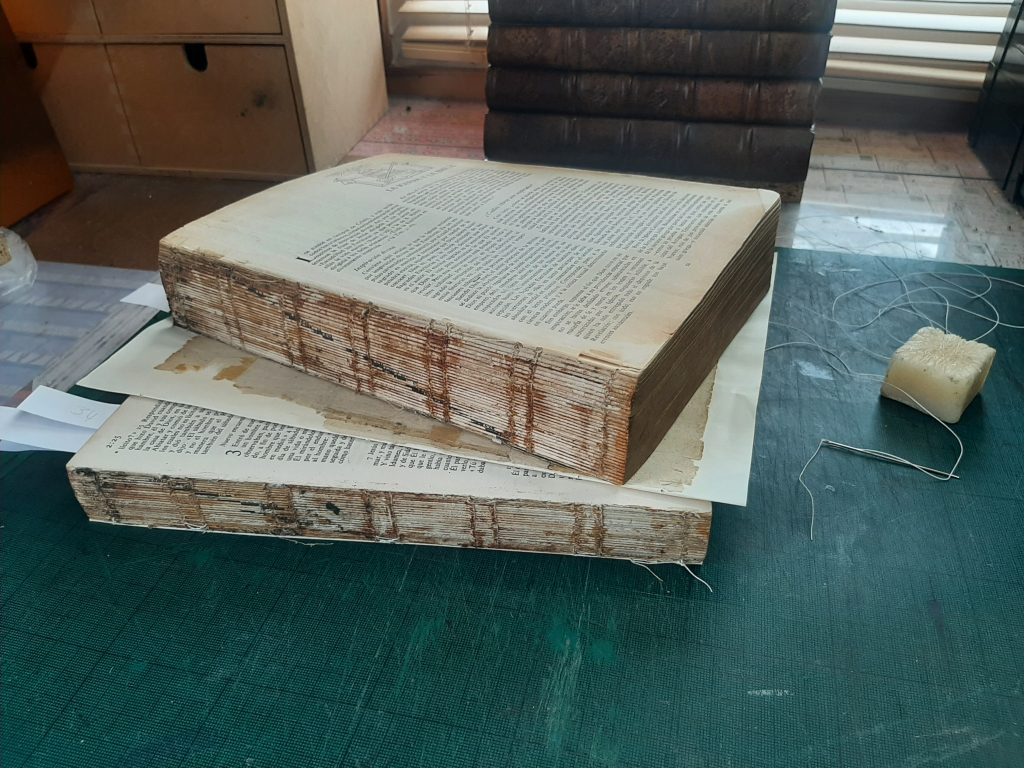
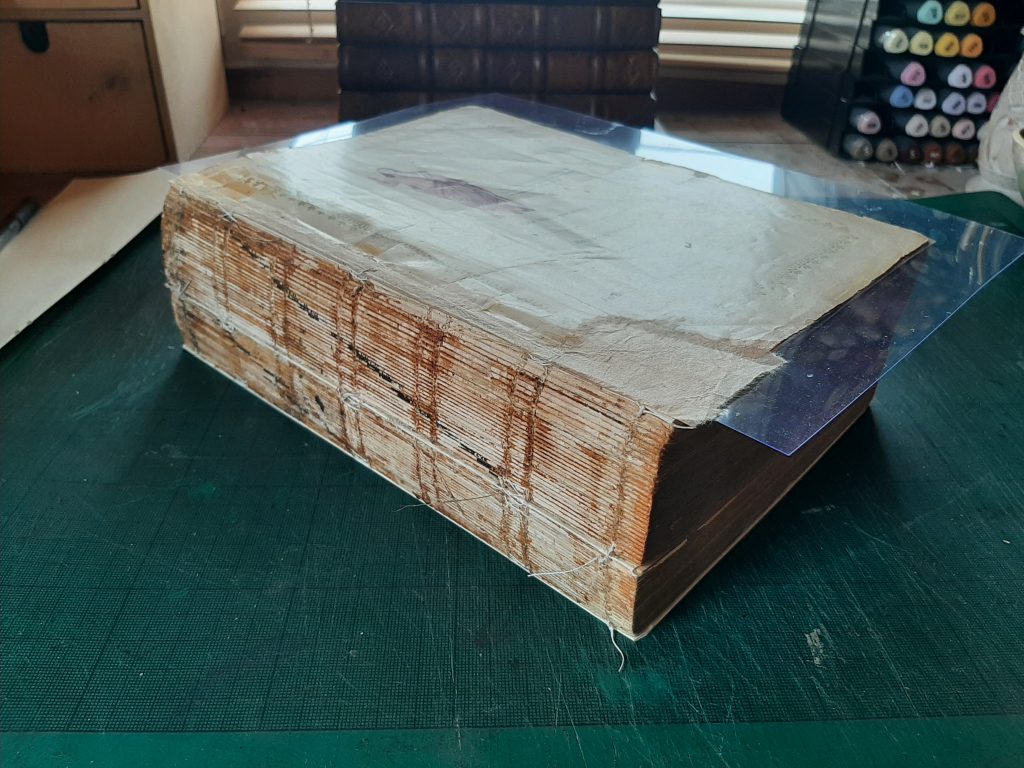
Take a look at this huge Spanish family Bible I repaired recently. The textblock (the pages) had split into two big sections, with detached pages at the front, middle, and back! As a result, there were extensive paper repairs to be carried out, and the weight of the book had pulled it out of its cover, giving it no protection.
Once all those paper repairs were done (see more below), I could remake the loose pages into sections and sew them on, and then rejoin the two halves together, all sewn by hand for a strong yet flexible spine. This was then lined with linen as an extra support, and helps reattach the cover as well. So don’t despair if your book has split into different parts – chances are it can be repaired.
Book cover damage - detached boards or ruined material
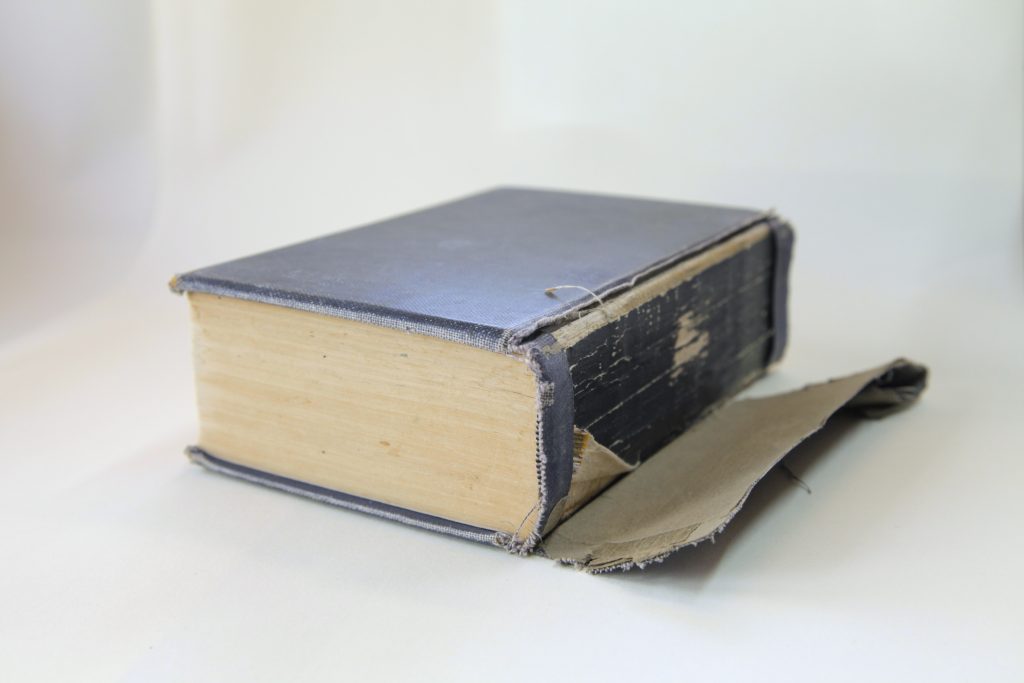
This is a serious one, because the boards are the book’s main protection, so it’s best to act quickly to solve this problem. Generally there are two approaches – reattach the original boards, or make a new cover. My approach is always to salvage as much of the original as possible, so if the boards can be reused they will be.
For 3 of the 4 volumes in this set from 1839, the boards had become detached but were still sturdy and complete. I will always try to keep as much of the original as possible, so decided to do what’s called a ‘joint tacket’ to reattach the original boards with the help of a linen hinge, which is then hidden beneath the endpapers and replacement leather spine. You can see much more detail of this process in this video series I did about the restoration of these books.
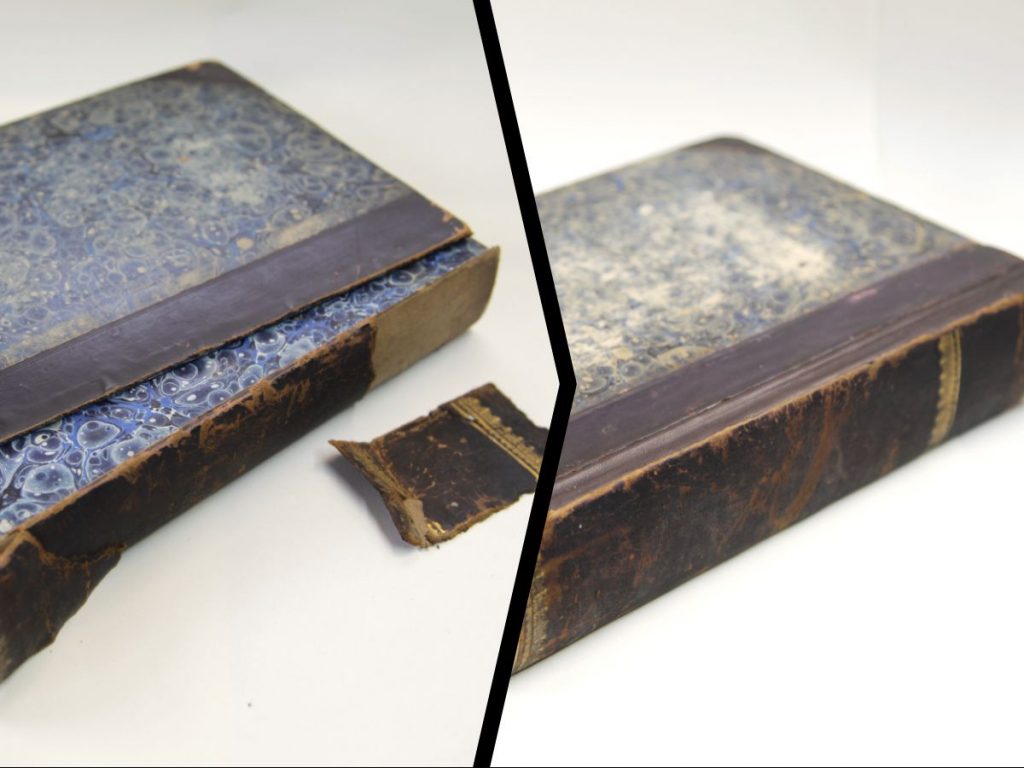
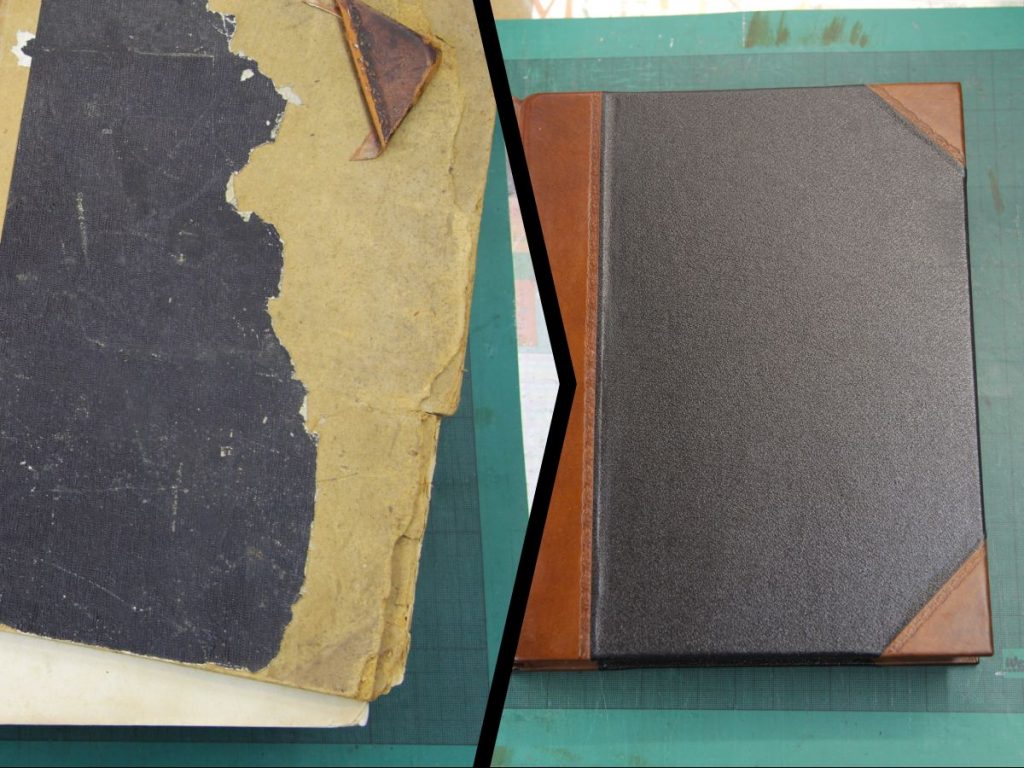
Sometimes, though, you might just be left with a completely worn out book! The cover of this Victorian-era edition of Modern Practical Farriery was in a terrible state, with a shattered spine, only one surviving leather corner, and detached boards which appeared to have been chewed by mice (it happens). There were enough original pieces to guide me in making an entirely new cover in a similar style, and the customer was very happy with the result.
You can see this repair in more detail in my blog post detailing the process [coming soon]
Book corner damage - worn away or delaminated,
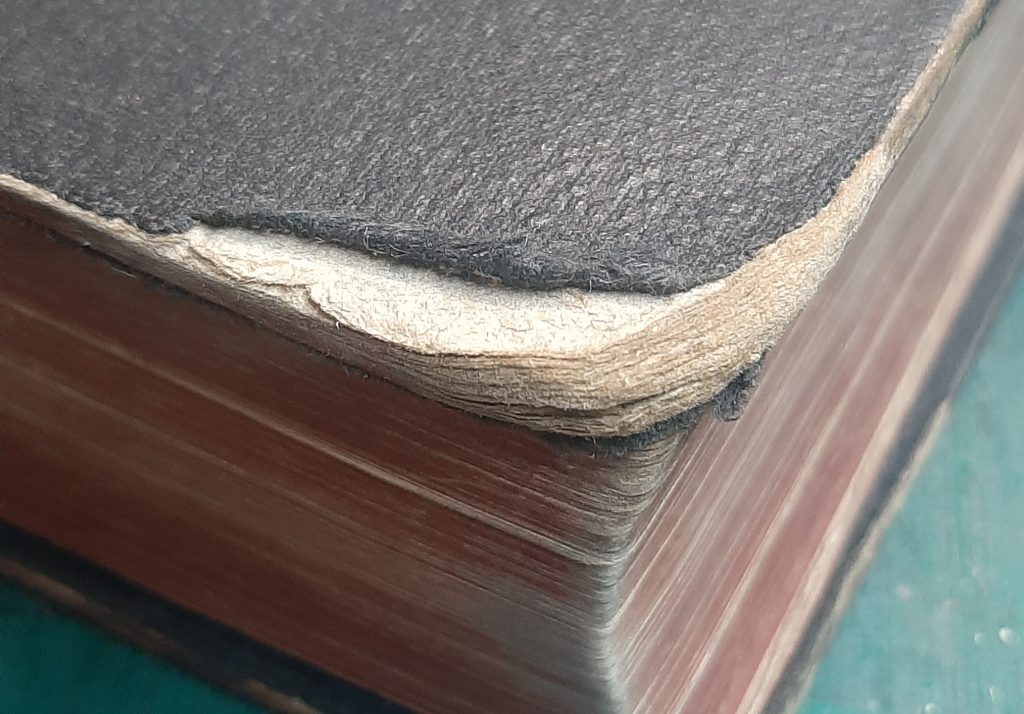
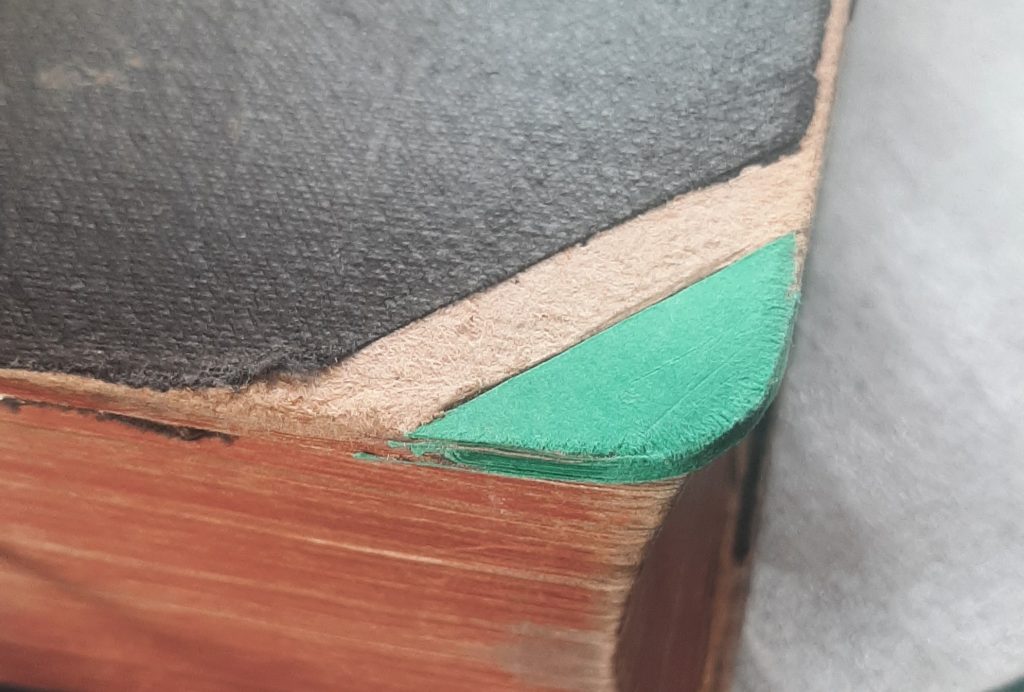
Whether attached or not, the cover’s corners are liable to take the brunt of the bangs and bumps a book is often subject to. With certain kinds of boards, made from compressed layers of other material, this can lead to them wearing away and leaving the corners of the pages exposed, meaning further damage.
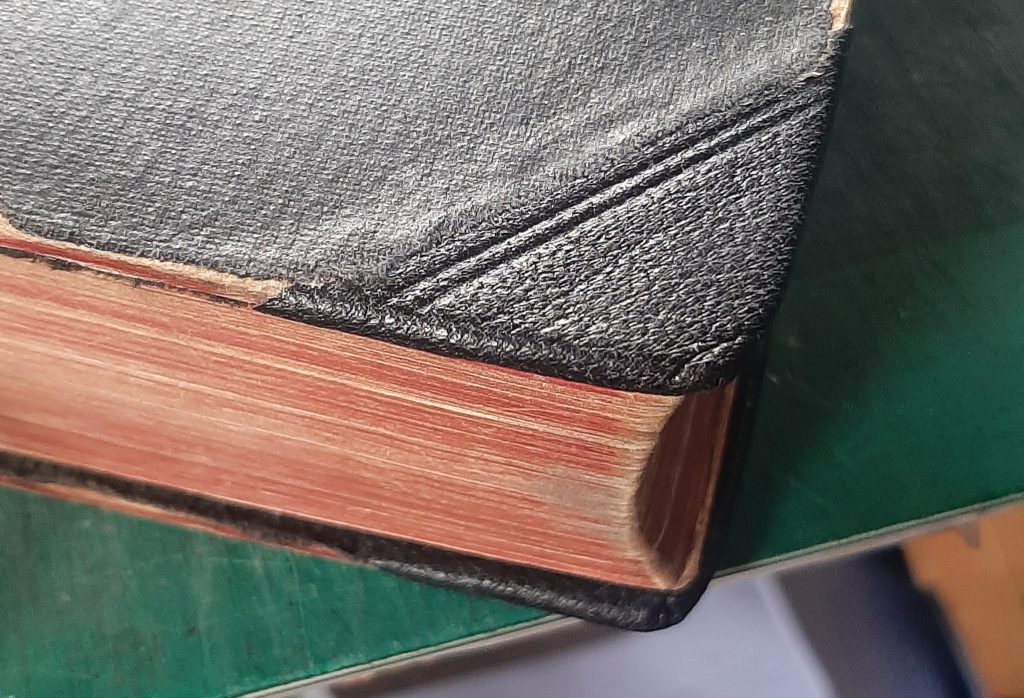
This was the case with this Liber Usualis, a Gregorian chant book. The boards were delaminating (separating into layers), and there had been enough loss of that material that I needed to act to protect the textblock. I rebuilt the corner with layers of stiff card, shaping it to the book, and recovering. With all four corners needing attention, I made this book into a half-bound cover i.e. with leather spine and corners, but the same can be done with the original covering material of book cloth.
Tape!
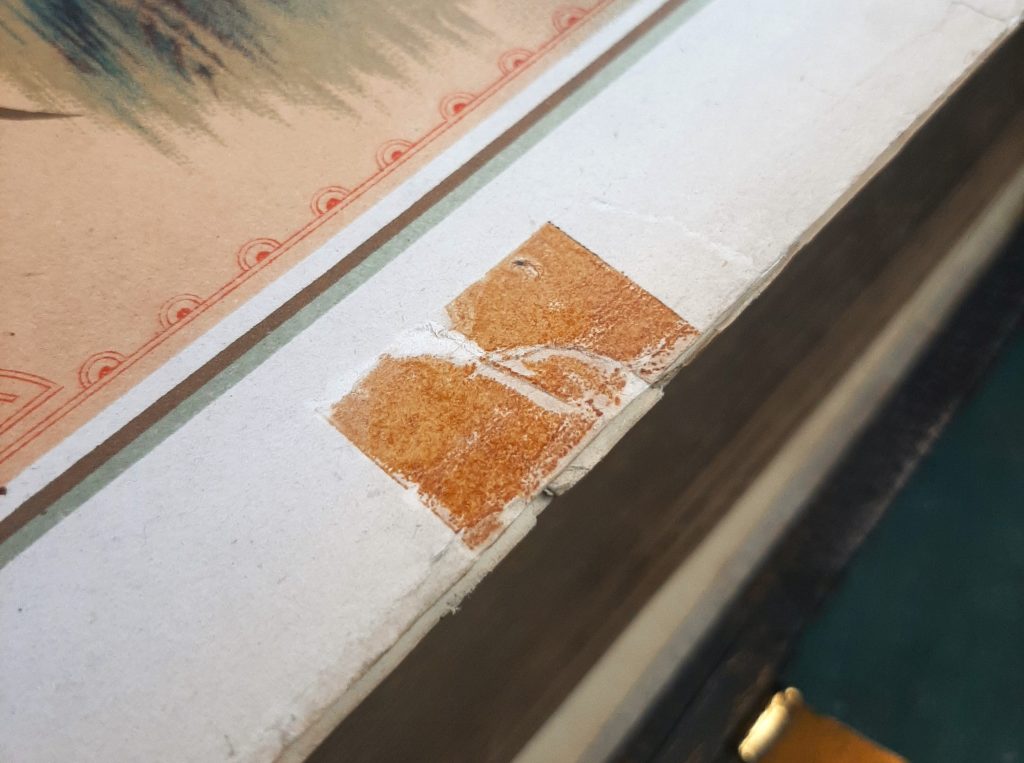
The Ancient Enemy of the Bookbinders. Pretty much any kind of tape you have at home (scotch tape, cellotape, ducttape, masking tape…) is TERRIBLE for your books. The adhesive side is very acidic and it will eventually dry up and flake off, leaving you back where you started, plus cause irreversible discolouration to the pages. You’re much better off leaving torn or loose pages in that state than sticking them back together with any of these tapes.
You can see the orange residue left behind by scotch/cellotape – no amount of cleaning will remove this!
Fortunately, I’ve never come across a tape I couldn’t eventually remove. This is done very delicately with a cotton wool bud and a solvent to dissolve the adhesive on the tape, which then evaporates and doesn’t leave a stain behind. I then repair the underlying tear with Japanese tissue and a clear pH neutral adhesive, or a pH neutral self-adhesive tape made specifically for paper repairs.
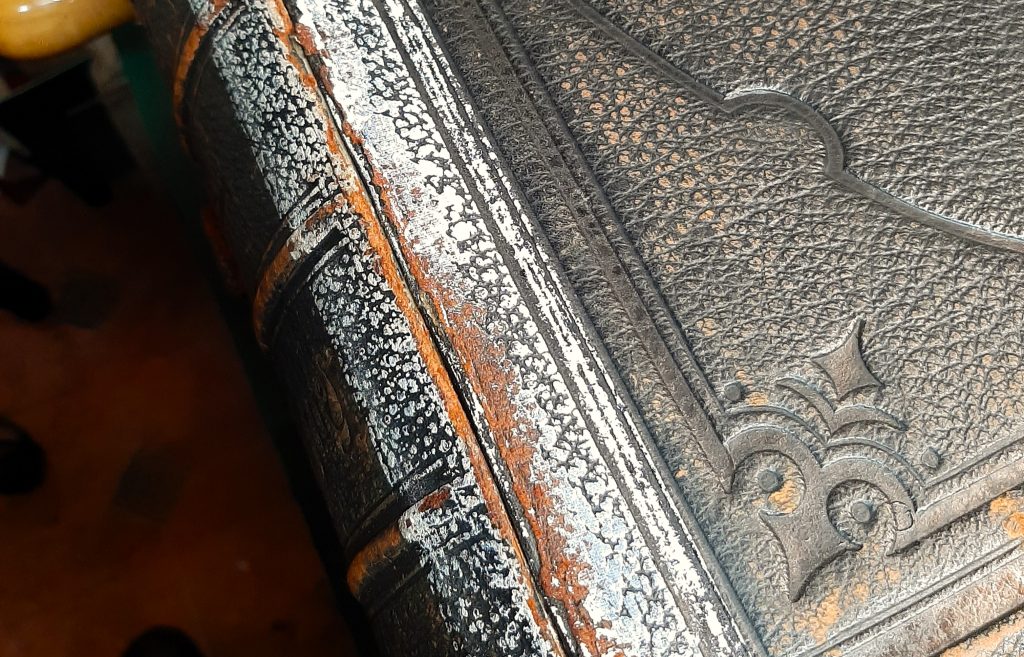
If the cover is held together by duct tape, I have to warm that up with a heat gun before pealing it away. Annoyingly, it almost always leaves a white residue behind which then requires further delicate cleaning with the solvent, which was the process for this Victorian Bible:
Already seen the problem you want me to fix? Click ‘Save my book’ and get in touch
Detached or loose spine
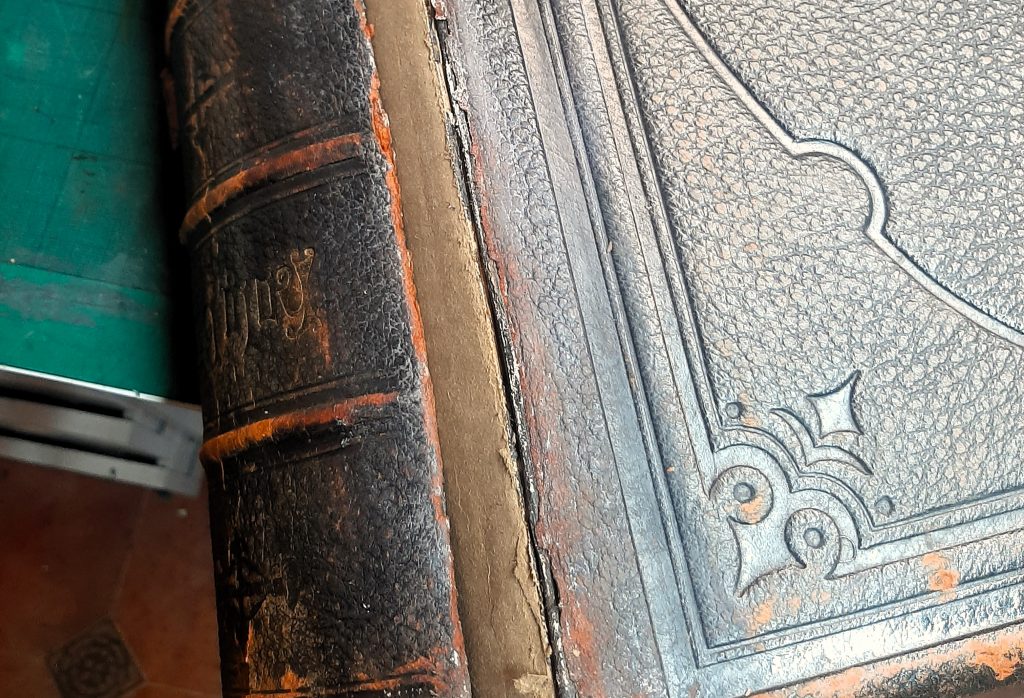
Another common sign of years of use, but less damaging to the book than it splitting in half. While it may just be ‘cosmetic’, the cover’s spine is an integral part of your book, protects the ‘backbone’ of the pages inside, and of course is the more recognisable part of the book when it’s on the shelf, so it’s only right that we fix it.
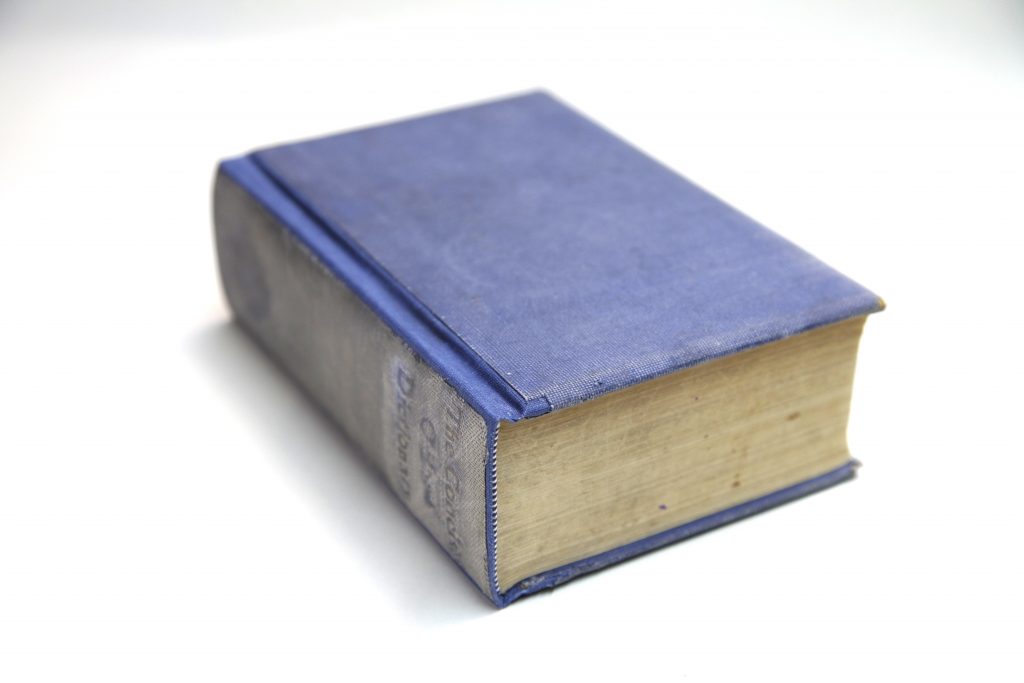
For this Oxford English Dictionary (which travelled with the customer from their home to their Oxford college some 50 years ago) this was the only thing wrong with the book, apart from the cover needing a good paste wash to remove the decades of dirt.
Repairing it did involve some delicate surgery, including lifting the existing covering material with a very sharp lifting knife (without putting holes in it!) and sliding the cloth of the new structural spine under the old spine. With that in place, I then glued the old spine down on top of it, retaining its original character and rendering the dictionary useful once again.
Tears, rips, and holes
Perhaps the worst damage to a book because it can really affect its readability. It’s fairly common for damage to the pages to enter into the text itself, obscuring words or even causing the loss of parts of the page.
Fortunately for you, there are numerous ways to rectify such tears, holes, and compromised page edges. Most of these involve Japanese tissue, the go to material for conservators of all kinds because of it is light, thin and incredibly strong. I have several types so I can select the right material to repair the pages in your book.
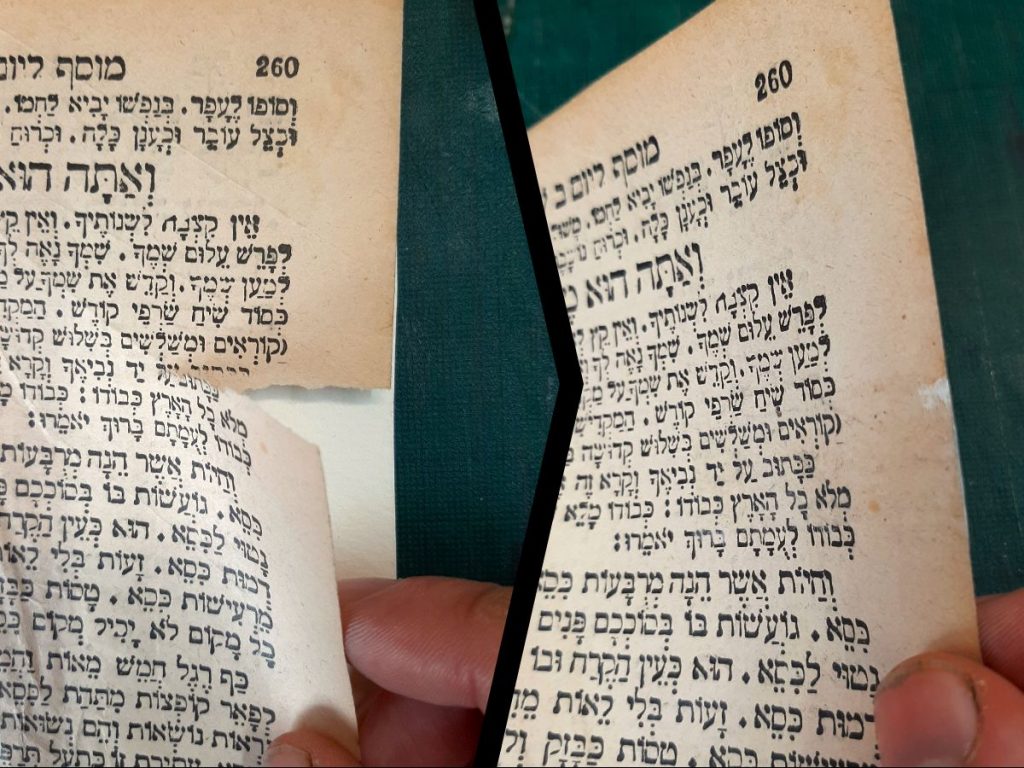
There are three examples to look at here – a tear which had split part of the text, a badly worn foredge, and a hole burned into the page! In the first case, where the tear could affect the readability of the text, I’ll use a tissue with a heat-set adhesive on the reverse. When lightly damped with a sponge and fixed in place with a specialist heating tool, the result is practically transparent, meaning you can read your book without the repair distracting you.
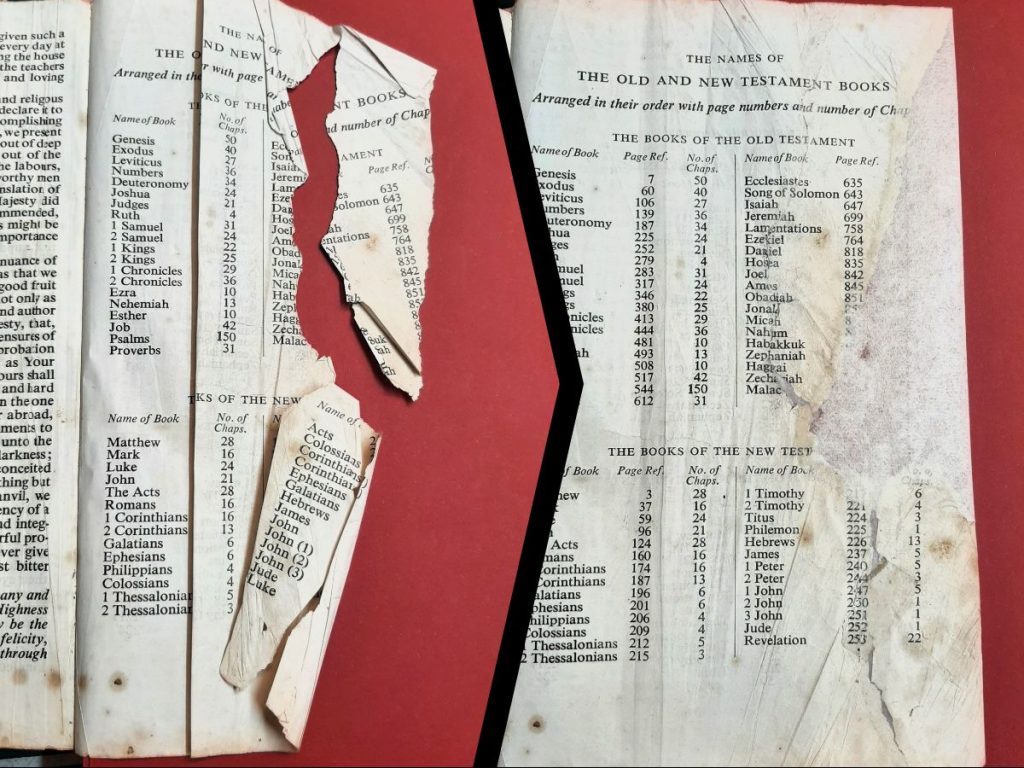
A frayed foredge is a storehouse of future problems. The delicate edge starts to deteriorate, leading to tears which snake their way into the text (like this Bible contents page). My solution is to ‘rebuild’ the foredge with a piece of Japanese tissue in a similar tone to the paper, cut to match whatever shape the original foredge is in with the help of a lightboard. This stops any further fraying and gives you a nice new edge so you can turn the pages without causing further damage. It’ll never look like new, but you’ll be able to use the book again without anxiety.
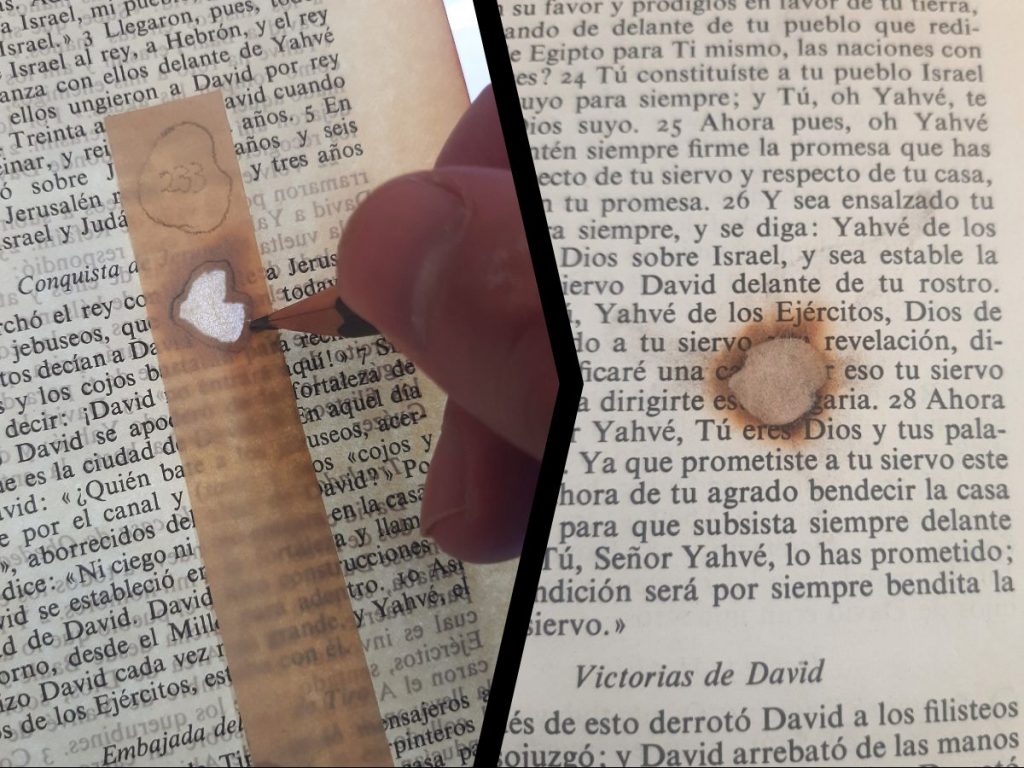
I suspect a cigarette was involved during the reading of this Bible, and a stray ember caused burn holes in several pages. While such holes don’t lead to further tears as immediately as frayed page edges, they still compromise the structure of the paper. I thought white Japanese tissue would be too stark and distracting, so I darkened the tissue with tea (remember doing that at school?). Patches for each page needing repair were torn into the shape of the hole, again with the help of the lightboard.
Dirty pages
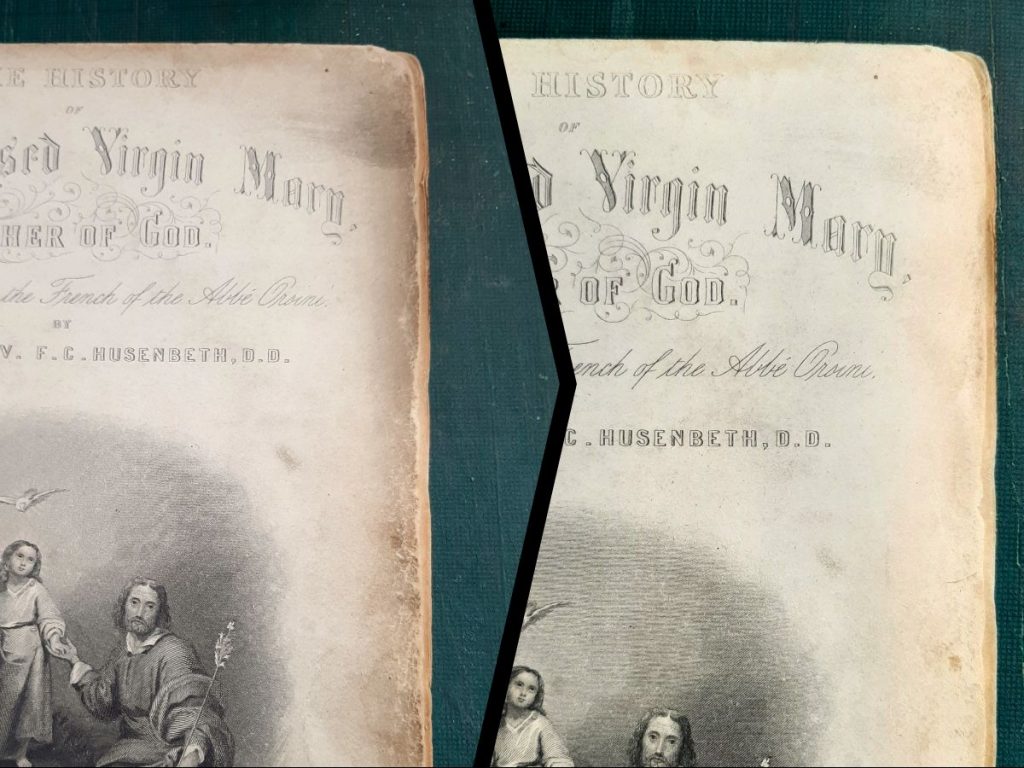
Book pages become dirty through use, particles in the air (old gas lighting being the bane of conservators for that reason), even patches of long-dead mold. They generally cause a dark grey layer to build up on the page, and while it may be hard to remember those papers being clean at all, something can be done to freshen them up.
While washing paper in distilled water is possible, it’s rarely required, and I would typically go for a dry cleaning – I use the conservation pads supplied by the Royal Warrant holder for conservation materials. These specialist pads gently absorb and lift off the layers of dirt, and the silicone binding material can be brushed away afterwards. It can really transform the look of a well-thumbed book.
Frayed ribbons
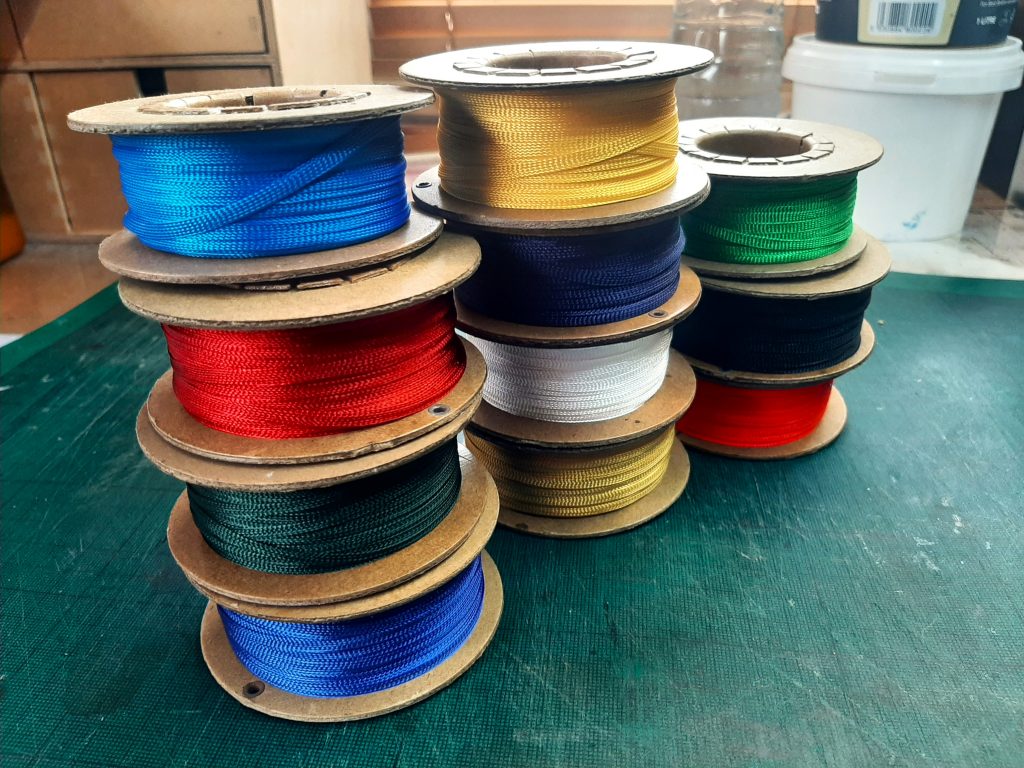
Bibles and Missals are among the most heavily used and dearly treasured books in your library. A unique feature of these books is the number of ribbons in them, and these being reduced to stubs by constant use is frequently a reason people contact me about having their book repaired.
Being impossible to repair, the only solution is to replace them. This typically involves taking the book out of its cover, stripping the linings from the spine in order to remove the old ribbons, and then put everything back together. I always keep a stock of a variety of colours, and you have two different types of ribbon (double-faced satin and woven), so we can discuss what you’d like before the work begins.
What can't be repaired?
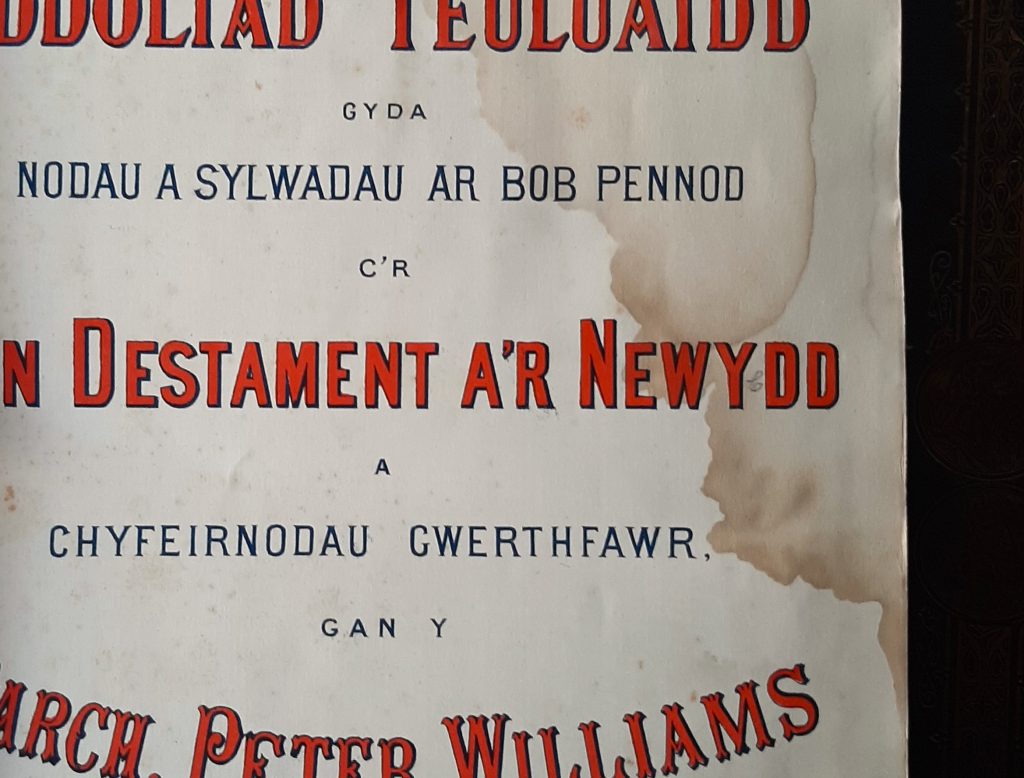
Stains – liquids spilled on books are practically impossible to remove. This large Welsh Bible must have had a tea or coffee knocked over on top of it at some point. Fortunately the thick glossy paper of the title page shielded the paper beneath it very well so the damage wasn’t as bad as it could have been. Still, a dry cleaning treatment (like the one above) isn’t going to improve the look of this page at all, so typically it just has to be left as it is.
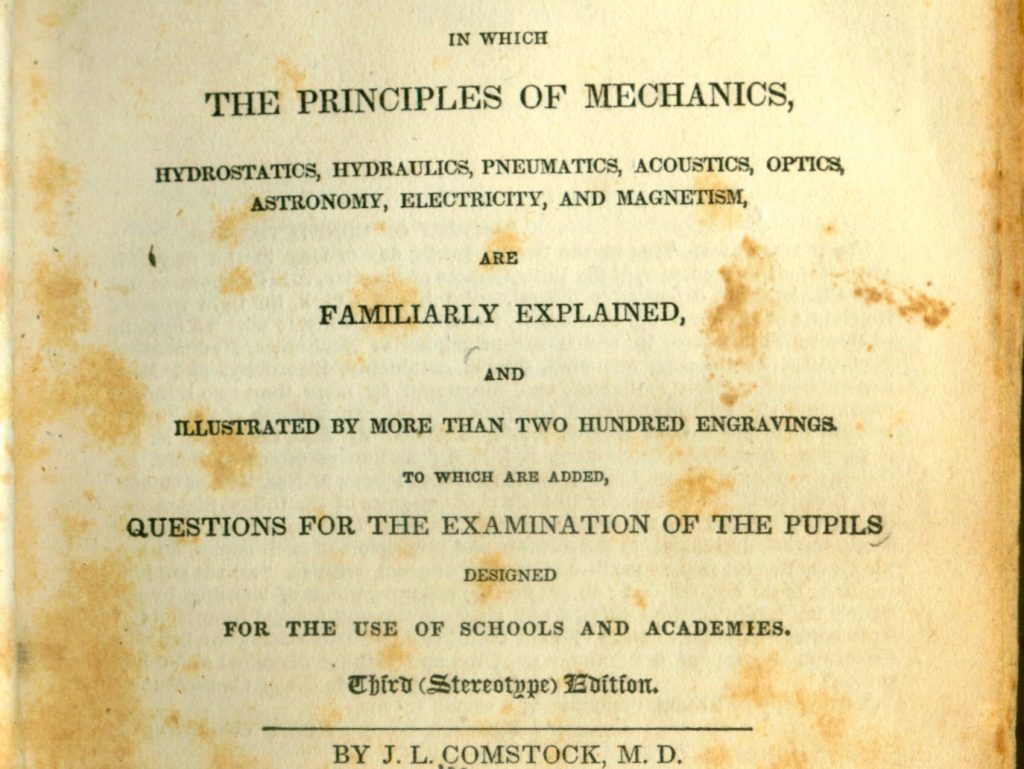
Foxing – the orange/brown (fox coloured!) spots, caused by the oxidation of metallic impurities in the paper. Don’t worry, it’s not mold, and is more cosmetic than anything. Much like staining, this is discolouration deep in the fibres of the paper, so I’d have to completely disassemble the book, wash the pages one-by-one in distilled water, then resew the book, so you can imagine how expensive an option it is! I have heard of people attempting to sand off the spots, but I certainly wouldn’t recommend it – you’re just causing further damage.
Live mold – unlike the staining left behind by dead mold (which is dry and powdery), live mold on a book is soft and fuzzy, and completely removing the organism is almost impossible. But don’t despair because you just need to make the microscopic fungus go dormant, then remove the growth. This can be done by freezing the book and then drying it out thoroughly before brushing away the remaining fuzz.
Want more information about the process we’ll go through to restore your book? Take a look at my main Book Repair page.